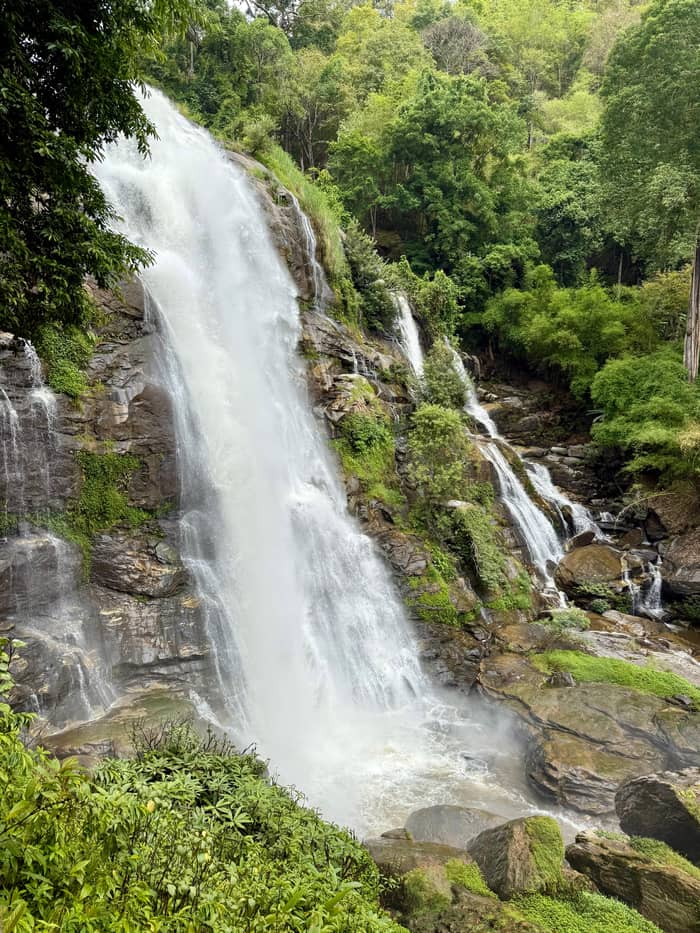
Villages day
Waterfalls and villages
Hotel pickup, long day
- Length10 hours
- PickupIncluded
- From$34
Interactive to-do list
Things to do · 10 items
Check off each item as you go. Your progress stays saved on this device.
0 / 10 ready
All set. Pick your date for the mountain, and the rest is settled.
Book your seatHill villages, a royal agricultural station and mountain coffee share the slopes with the waterfalls. Learn what the Royal Project does, who lives here and how to visit well.
Editorial team, doiinthanontour.top · Updated November 16, 2026 · 9 mins to read
Main facts
Thailand's Royal Project was initiated in 1969 by King Bhumibol Adulyadej the Great after he visited Doi Pui, a hill village near Chiang Mai.1 The Highland Research and Development Institute, which now carries the work on, describes an approach that covered farming, resource management, schooling, health, infrastructure, marketing and people's development together.5 The breadth of that list is the point: the program treats a village as a whole community, not just a field.
The Royal Thai Government established that institute in 2005 to extend the principles of the Royal Project beyond its original areas.6 The idea is practical: help highland communities earn a living with crops that suit the cool climate, and protect the forest and the water at the same time. The approach is slow and patient, and it puts research next to the farms instead of far away in a distant lab or office.
On Doi Inthanon the cool air matters. Tourism Thailand notes that at 2,565 metres the cool breeze lets hill tribe farmers grow temperate fruit, vegetables and flowers under the Royal Project.7 TAT's own travel video calls the mountain home to the Doi Inthanon Royal Projects, as well as to the highest peak, the waterfalls and the green valleys.8 Together those two lines are a fair short summary of what the mountain offers: a park with big views and a working landscape of small farms and villages.
Side by side
| Center | Height and climate | People |
|---|---|---|
| Inthanon station | 600 to 1,400 meters, 22 °C12,13 | More than 7,640 in 11 villages3 |
| Khun Wang | 900 to 1,400 meters, 18 °C17 | More than 2,240 in 4 villages16 |
| Khun Pae | 800 to 1,200 meters, 24 °C18 | 3,220 in 4 villages15 |
Figures from the institute's fact sheets; Khun Pae and Khun Wang lie in the same part of Chiang Mai Province, outside the main park road.18
The station at Baan Kuhn Glang began work in 1979 and ranks among the four Royal agricultural stations.2 It sits inside the national park, on complex mountainous terrain at 600 to 1,400 meters above sea level, where the institute gives an average temperature of 22 °C.12,13 The name on the gate is long, but the idea is simple: a mountain farm that tests which crops grow best in cool air and shares the results with the farmers around it.
Its mission is research, with a field role. The station researches flowers and foliage trees, and teaches temperate farming to hill tribe families in the villages of the Doi Inthanon area.14 It also promotes hill tribe handicrafts and a saving group, and serves as a highland agricultural learning center for students, farmers and anyone interested.11 That mix of research, craft and teaching makes the station a place for students and farmers as well as travellers, and a visit is worth a few unhurried minutes of your day.
The produce list gives a feel for the altitude. It includes peach, persimmon, strawberry, avocado, kiwi and Arabica coffee, as well as roses and Gerbera.4 It is a place to learn how a mountain farm works, and a good reason to look out for the station's fruit and flowers when you stop at a village market on the way. The station is a working place rather than an attraction, so go with respect for the staff and the farmers, and ask before you walk into fields or greenhouses.
More than 7,640 Hmong and Karen people live in 11 villages and 37 communities around the station, according to the institute that runs it.3 The Karen are written Pgakuuyau in the institute's fact sheet, so you may see both names on signs and in listings.16 Spelling varies between sources, and the people themselves may use other names, so listen to how your guide and your host describe their community and follow their lead.
The names on the mountain carry the Karen language. The national park says the name Ang Ka comes from the Paganyaw (Karen) language, where it means big, and that the mountain was once called Doi Luang or Doi Ang Ka by the villagers.19 It is a reminder that people lived here long before the park. Place names on the map of the park can come from local languages, so reading them aloud with your guide is a small way to learn.
Other Royal Project areas nearby give a sense of scale. The Khun Wang area has more than 2,240 Karen and Hmong in 4 villages and 7 communities, and the Khun Pae area has 3,220 in 4 villages and 13 communities.16,15 Each center runs learning activities, so a village visit can be a real introduction to how a hill community lives. You do not need to see every center. Choose a center or village that fits your route, and spend time there instead of rushing through all of them in a single afternoon.
Pick your visit
Say what you want from a village stop and see the match.
If I want coffee
The coffee-tasting trek
A small-group tour tastes coffee at Baan Mae Klang Luang.
If I want a market stop
The sightseeing-only day
It names a Hmong community market and a coffee shop.
If I want waterfalls and villages
The 10 hour day
It stops at waterfalls and tribal villages.
If I want to learn how the farms work
The Royal Project station
It serves as a highland agricultural learning center.11
If I want the simplest day
The site tour
It includes Mae Klang Luang in 9 hours.
Pick a tour
Villages day
Hotel pickup, long day
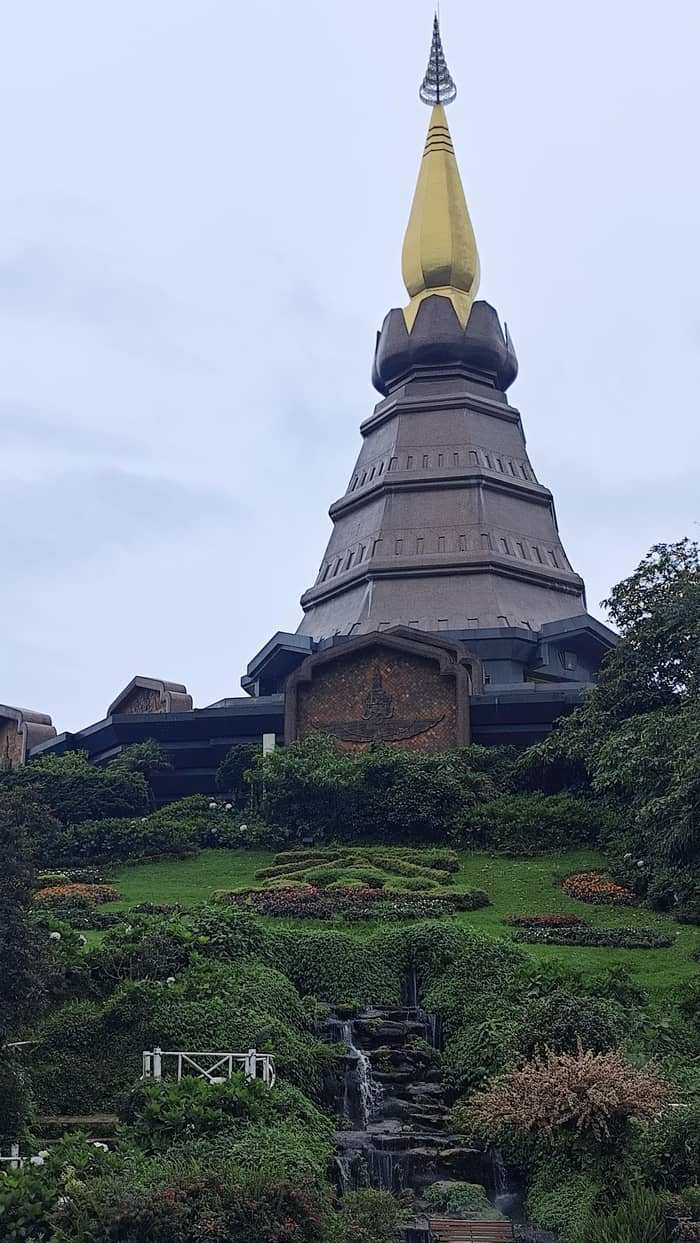
Coffee trek
Small group
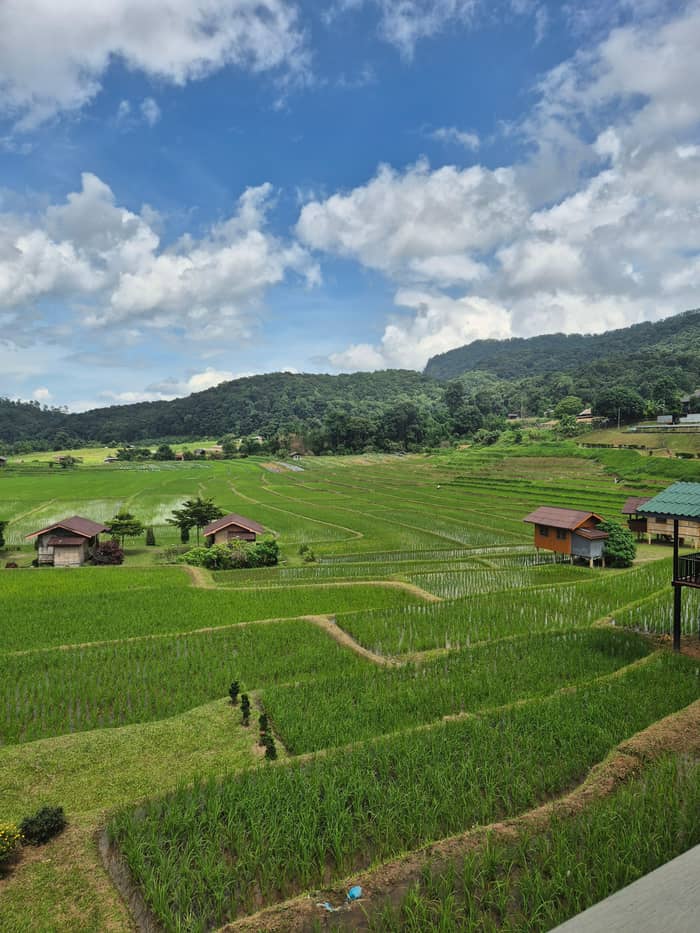
No trek
Market and coffee shop
Coffee is part of the picture. The station lists Arabica coffee among its main produce, and the Khun Wang center names coffee alongside Chinese tea and mushrooms.4,21 Anyone who types Doi Inthanon National Park coffee into a search box is after exactly this: a farm or village where the beans are grown at height. Look for a farm gate or a village cafe that roasts its own beans, and ask where the coffee was grown, as the answer is part of the story you came for.
Tours turn it into a stop. A small-group Pha Dok Siew tour lists a coffee tasting in Baan Mae Klang Luang, and the site tour calls at Mae Klang Luang during its 9 hour day. A sightseeing-only listing names a coffee shop at Ban Mae Klang Luang and a Hmong community market among its stops. These stops are short and easy, which makes them a gentle way to add a cultural element to a day that is otherwise about forests, waterfalls and the summit.
Khun Wang adds tea. The center shows tea production and tasting at the tea factory all year round, with Hmong lifestyles, weaving and agriculture on show at Baan Khun Wang.22,23 If a hot drink is your goal on a cold morning, a village cafe at height is the right place to look for one. Ask the staff how each tea or coffee is made, and give yourself time to taste slowly, because the cool air and the view are part of what makes it enjoyable.
Price the visit
Pick a group size and compare tours that include villages or coffee.
4 options compared
Pick a group size and compare tours that include villages or coffee.
≈
View≈
View≈
View≈
ViewStarting prices as on the booking platform, converted at the ECB reference rate. You see the exact price at booking.
How it grew
The beginning
The Royal Project was initiated in 1969.1
A decade later
The station started work in 1979.2
The next years
Much later
The Highland Research and Development Institute followed in 2005.6
Today
The station also serves as a highland learning center.11
A Karen village in Doi Inthanon National Park is somebody's home. The listings that stop at villages describe Karen and Hmong visits and a traditional village, which are guided visits rather than drop-ins. Ask your guide how the visit is arranged and whether the money you spend stays in the community. If the guide cannot answer, treat that as a sign to ask a second question, and choose operators that explain how they work with the villages they visit.
Behave as you would in anyone's village. Greet people, ask before you photograph a person, keep your voice low, and do not hand out sweets or money to children. Buy something small from a market stall or a coffee shop, and carry cash in small notes, which keeps a small purchase easy. Small gestures matter most: smile, say thank you, wait for an invitation before you enter a house or a yard, and keep your drone and your loud speaker in the bag.
Keep animals and plants undisturbed, and take your rubbish with you. The park lists nature trails, trekking and visiting waterfalls among its activities, and the same care applies to every trail you walk and every stall you stop at.24 A polite visit and a quiet camera are a good way to be welcome again next time. When someone declines a photograph, accept it with thanks and put the camera away, since the memory matters more than the picture.
Video
Trevor Carlson on YouTube · Video data is requested only when you tap play.
develop and promote temperate crop cultivation among hill tribe people living in the villages in Doi Inthanon area
The institute gives driving directions to the Inthanon station. Take highway 108, turn right onto highway 1009 just before Jom Thong District, and at 33 km turn right to Baan Kuhn Glang, then drive about a kilometer to reach the station.20 That puts it just off the main park road. The lane to the station is a village road, so slow down, watch for farm vehicles and give way to walkers and children.
Khun Wang lies farther out: the fact sheet gives 106 km from Chiang Mai city and 3 hours by its first route.25 A hired driver or a tour is the practical way to reach it, and the roads are best driven in daylight. If you are on a tour, your guide handles the turns and the timing, and you can spend the drive looking at the terraces and the forest on the hillsides above you, and a quiet moment to plan the next stop.
The park's own route description covers the main road. The main road is short to describe: about 56 kilometers on Route 108, then Highway 1009, with the park entry at milestone 8 and the headquarters at milestone 31.26,27 Most stops in this guide sit along that road or just off it. Keep the park's receipt rule in mind and the entrance fee, and use the headquarters as the point where you check the weather and the road before you go farther.
Several listings combine the mountain's waterfalls with its villages. A 10 hour day with waterfalls and tribal villages and pickup included starts from $34, and a shared-van day with waterfalls, a Karen village and lunch starts from $36. Pick the day that matches your pace. Compare the pickup time, the group size and the length of the day, since the price alone does not tell you how much time you will spend in the villages themselves.
The site tour keeps the summit stops and adds Mae Klang Luang and Wachirathan Waterfall within 9 hours, from $38, with free cancellation until a day before departure. If you want a coffee tasting and a trek as well, the small-group Pha Dok Siew tour adds those, from $60. The coffee tasting is a good way to meet a village on its own ground, and the small group keeps the visit friendly and quiet for the people who live there.
TAT notes that the park was named one of the Green Destinations Top 100 Stories for 2026, for its sustainable tourism practices.28 That is a good reason to choose operators who respect the community, keep groups small and support local businesses. Ask the operator how a village visit is arranged before you pay. A good operator will tell you where the money goes, how long the village stop lasts and what the guide expects from you, and will welcome the questions you ask.
FAQ
The institute counts more than 7,640 Hmong and Karen in 11 villages and 37 communities around the station.3
Several listings include a Karen or traditional village stop.
The station lists Arabica coffee, and a small-group tour tastes coffee at Baan Mae Klang Luang.4
The fact sheet gives a trip of 3 hours by the first route.25
TAT says the park was named one of the Green Destinations Top 100 Stories for 2026.28
Sources
Planning a day on Doi Inthanon? Ask a real person here.