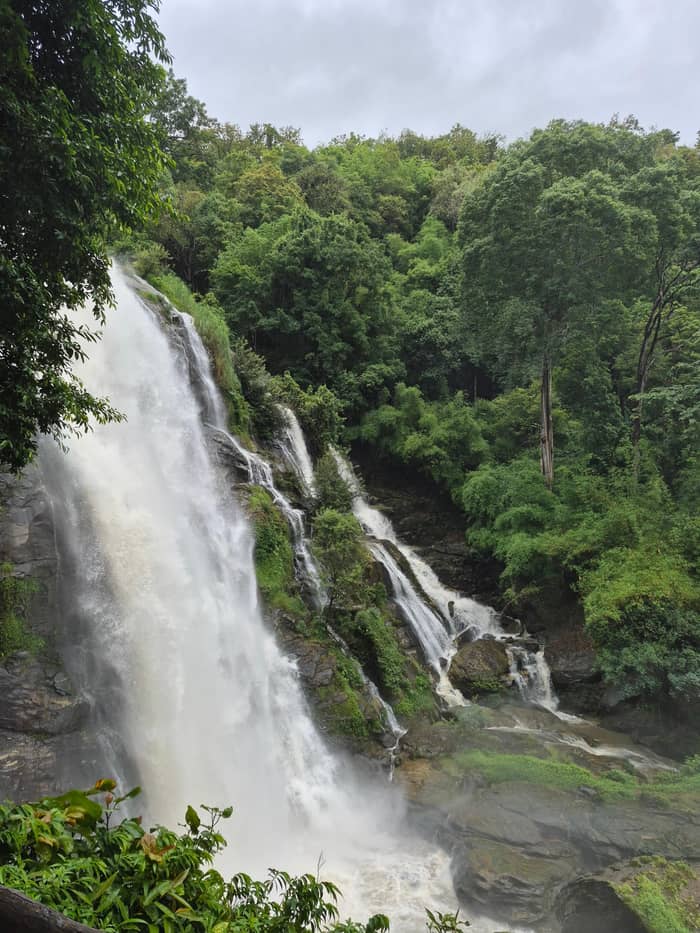
Tropical
Foothills
Below the cloud
See this optionInteractive to-do list
The quick version
Doi Inthanon National Park gets cold at the top, with winter lows near freezing, so bring warm layers and a shell for the summit.
What to expect
Things to do · 11 items
Check off each item as you go. Your progress stays saved on this device.
0 / 11 ready
All set. Pick your date for the mountain, and the rest is settled.
Book your seatThe summit can sit near freezing while Chiang Mai is warm. See what the weather service and the park report, then pack by altitude and season instead of guessing.
Editorial team, doiinthanontour.top · Updated November 16, 2026 · 9 mins to read
Main facts
The park spans a huge range of heights, and the climate changes with every band of altitude. The park describes a tropical climate where the land lies below 1,000 meters.5 Between 1,000 and 2,000 meters it is subtropical, and above 2,000 meters the park calls the climate temperate.6 A single drive up the park road therefore crosses several kinds of weather before you reach the car park. For a visitor this means the clothing question has no single answer, and it is worth deciding where you will spend your time before you decide what to carry.
The easiest way to feel that gradient is to compare readings. A winter morning on the summit measured 5°C by a TAT writer, while the city below was 24°C.3 Dressing for Chiang Mai and arriving at that summit is how visitors end up shivering at the top. The park's own wording is simple: it is rather cool all the year round because of its elevation.1 Plan your warmest layer for the highest stop of the day, and leave the cooler clothes in the van for the stops lower on the road.
Lower in the park the story is gentler. Around the Inthanon Royal Agricultural Station, at 600 to 1,400 meters, the institute that runs it gives an average temperature of 22 °C.7,8 Higher at Khun Wang, between 900 and 1,400 meters, the same institute lists an average of 18 °C.9 Where you are on the mountain counts for as much as which month you choose. The gap between those two numbers shows how much the climate shifts over a short drive up the same mountain, so a single forecast for the district tells you little about the top.
The numbers
| Date | Place | Reading |
|---|---|---|
| January 6, 2025 | Kew Mae Pan | 0.0 °C2 |
| February 1, 2025 | Kew Mae Pan | 4.0 °C17 |
| February 24 and 25, 2025 | Doi Inthanon | 6.0 °C18 |
| December 19, 2025 | Doi Inthanon mountaintop | 2.5 °C19 |
| December 22, 2025 | Doi Inthanon mountaintop | 3.0 °C20 |
Lowest temperatures named in the Thai Meteorological Department's monthly summaries; a day with a reading can be a one-off, not an average.2
Thailand's national park service sorts the year into seasons for Doi Inthanon, and the Doi Inthanon weather reads best by season and altitude together. By the park's calendar, March to May is summer, June to November is the rainy season, and December to February is winter.4 Those dates are the park's own, and the same text warns that the weather in each area differs a lot because of the range of heights. Check which season your visit falls in before you read any other advice, because the packing list changes with the calendar more than with the clock.
Two monsoons drive the pattern. Moist, cloud-bearing air comes with the southwest monsoon, and the northeast monsoon carries cold, dry air.13 The result is a long wet stretch in the middle of the year and a cool, drier spell around the turn of the calendar, and the mist and the frost belong to that cooler spell. The pattern is easy to remember: the middle of the year is wet and green, and the turn of the year is cool and clear, and the second spell is the one that brings the mist.
Rain adds up on the mountain. The park gives an average annual rainfall between 2,000 and 2,100 millimeters in its central region.14 At 1,800 meters and above, a cool wet climate prevails and low cloud leaves the forest clouded and foggy for most of the year.15 Even in the dry months, expect the higher viewpoints to disappear into cloud now and then. A morning start gives you the best chance to see the view before the cloud builds, and a light waterproof layer takes the sting out of any shower that arrives later.
Altitude at work
Readings from the Thai Meteorological Department show how cold the highest ground gets. In its January 2025 summary it reports a fall to 0.0 °C at Kew Mae Pan on January 6.2 That is the freezing point exactly, measured on the trail that many day tours include. It is a useful reminder that a cool day in the city can still be a freezing morning on the ridge, even with a tour that stops at sunrise only for a short while.
The cold is not limited to one month. In February 2025 the same station dropped to 4.0 °C on the first of the month, and Doi Inthanon itself fell to 6.0 °C on February 24 and 25.17,18 At the end of the year the mountaintop reached 2.5 °C on December 19, and 3.0 °C on December 22.19,20 Those readings come from the national weather service rather than a tour company, so they make a sound basis for deciding how much to pack for a cool-season start.
The park gives its own range for frost mornings. When frost arrives in December or January the top may reach anything from 0 to 4 degrees Celsius, frost included, and the summit can bring gale-force winds and subfreezing readings.21 The practical reading is that a warm layer is a requirement from December to February, not a nice extra. Treat the numbers as lows measured on particular days, not as a guarantee, and expect the real morning to land somewhere near them on a clear night.
What goes in the bag
Say when you are going and what you want to see, and the answer points to a packing level.
If I go from December to February
Warm layers, hat and gloves
The park gives 0-4 degrees Celsius with frost on the frosty days.21
If I go from March to May
A fleece and a light shell
Summer is the park's own term for this season and the top stays comfortable.4,1
If I go from June to November
A rain shell and grippy shoes
These are the rainy months in the park's season list.4
If I want sunrise on the summit
Everything you own that is warm
A winter morning there was measured at 5°C.3
If I only want the waterfalls
Light clothes and a layer
The lower areas are warmer than the top.8
Altitude bands
Tropical
Below the cloud
See this option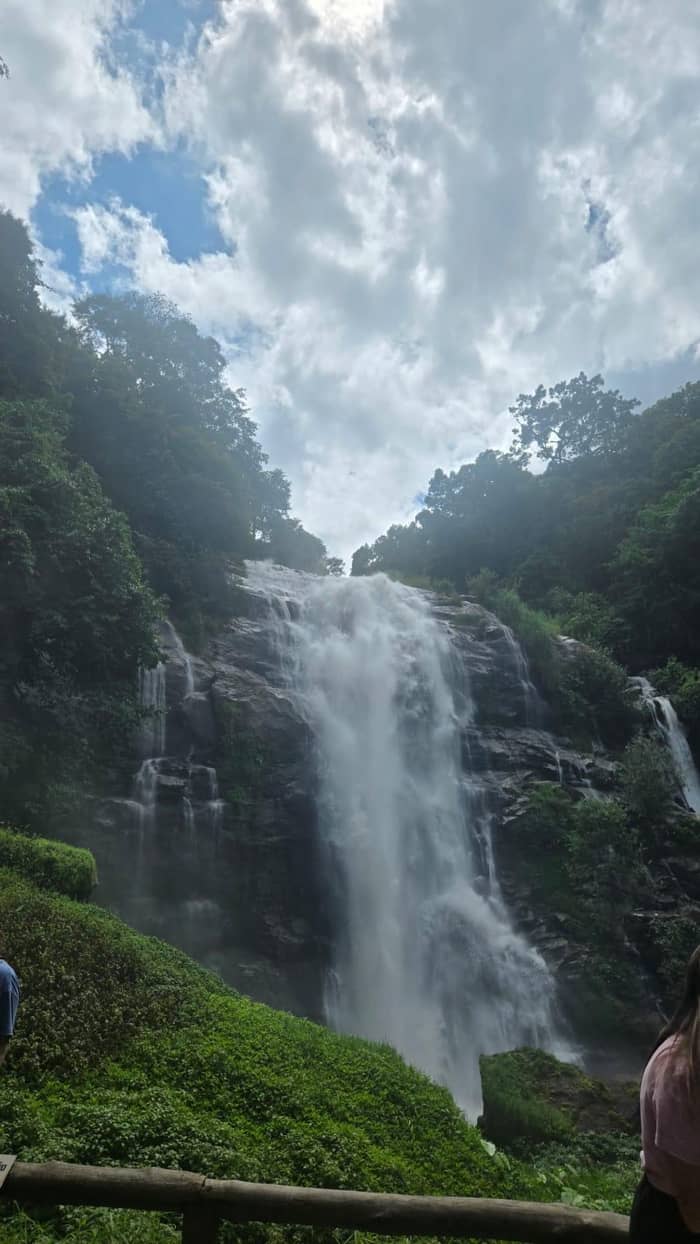
Subtropical
Villages and farms
See this option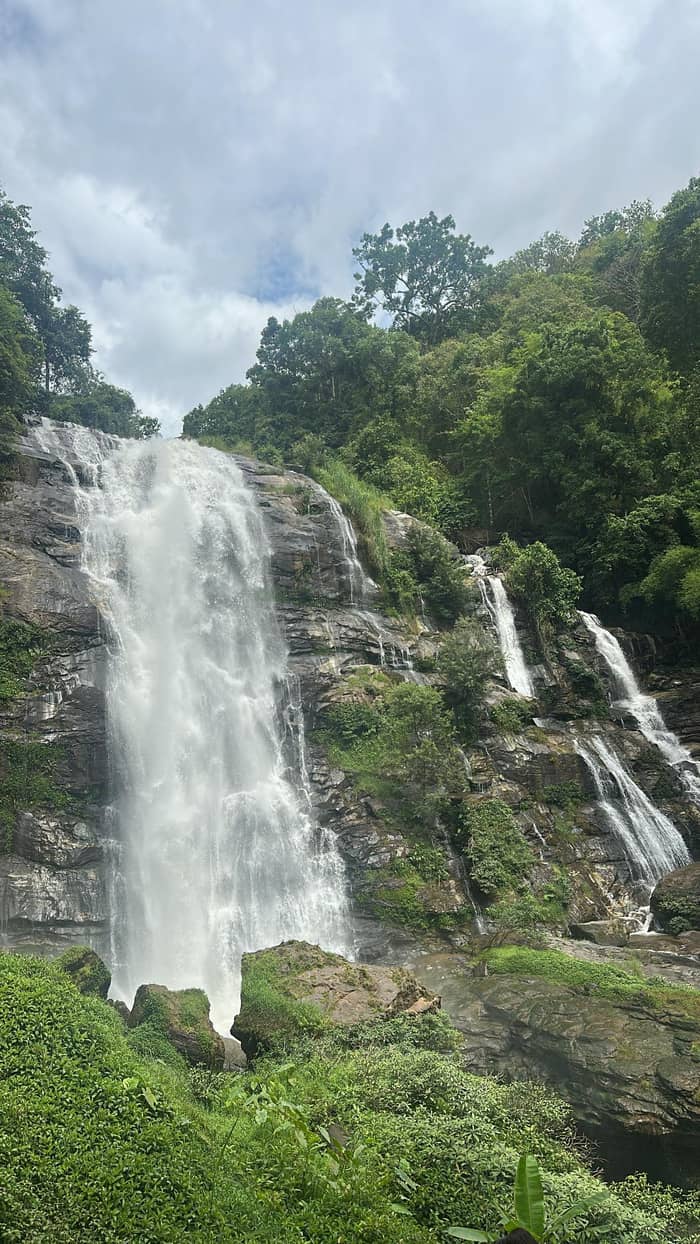
Temperate
Cloud, wind and frost
See this optionCool mornings give the park a signature sight. In the cooler months the mornings fill with mist, and TAT lists the summit and the Kiew Mae Pan lookout among favourite spots to watch it cover the countryside.23 The drive from Chiang Mai city takes around 90 minutes, TAT notes.12 The early light, the cool air and the white valleys together make an early start worthwhile. Booking the earliest slot you can find keeps that window open.
Frost shows up at the summit too. A TAT writer watched Thai teenagers photographing Mae Khaning, a delicate morning frost on the grass, at sunrise.10 TAT adds that January is the coldest month nationwide, with the sharpest cold in the northern mountains.24 TAT describes visitors gathering at the summit on New Year's Eve for the first light of the year, so book ahead for that date and wear the warmest layer you own.25
January has a second draw. The Wild Himalayan Cherry, known as Thai Sakura, blooms pink on the hillsides, and TAT names Doi Inthanon among the few places that show it.26 People who search for Doi Inthanon National Park cherry blossom should plan for January, which TAT calls the coldest month, and a morning start to see the pink and the mist together.27,24 Check with the operator or the park office what is blooming, and leave room in the day in case the colour has not come yet.
Match the day
Pick a party size and compare the cost of tours that suit the cool months.
4 options compared
Pick a party size and compare the cost of tours that suit the cool months.
≈
View≈
View≈
View≈
ViewStarting prices as on the booking platform, converted at the ECB reference rate. You see the exact price at booking.
A cool morning
Before sunrise
A winter summit morning can bring 5°C and frost on the grass.3,10
7:00 AM
TAT says you will need both at this hour.11
Mid-morning
The sea of mist is a feature of the cooler months.12
11:00 AM
By this hour the sweater is going into the backpack.11
Afternoon
The lower station area averages 22 °C.8
TAT's winter advice is a golden rule of layers. By 7:00 AM you need a sweater and a scarf, and by 11:00 AM the sweater is stuffed into the backpack.11 Dress for the early start, then peel as the sun climbs. A thin base, a fleece and a light windproof shell cover most of a cool-season day. Choose fabrics that dry quickly and fold small, since a layer that lives in the daypack for most of the afternoon needs to be light.
Footwear matters on wet stone and boardwalk. Closed shoes with grip suit the trails and the steps to the viewpoints, and flip-flops are a poor idea, as the TAT writer admits after arriving at a 5°C summit in a linen shirt and flip-flops.3 Add warm socks, and a hat and gloves if you plan to be at the top for sunrise. If you are walking a trail, a pair of trekking socks and shoes with a firm sole are more valuable than any fashionable jacket you could bring.
Visits to temples and pagodas add a dress rule. The listings that stop at the royal pagodas ask guests to cover shoulders and knees, and one asks for no tank tops and no short pants. A long-sleeved top under a fleece solves the cold and the dress code in the same garment, and a light scarf or sarong travels easily. Keep your tour guide's advice in mind too, since they see the conditions every week and will tell you what to leave in the van and what to carry.
Video
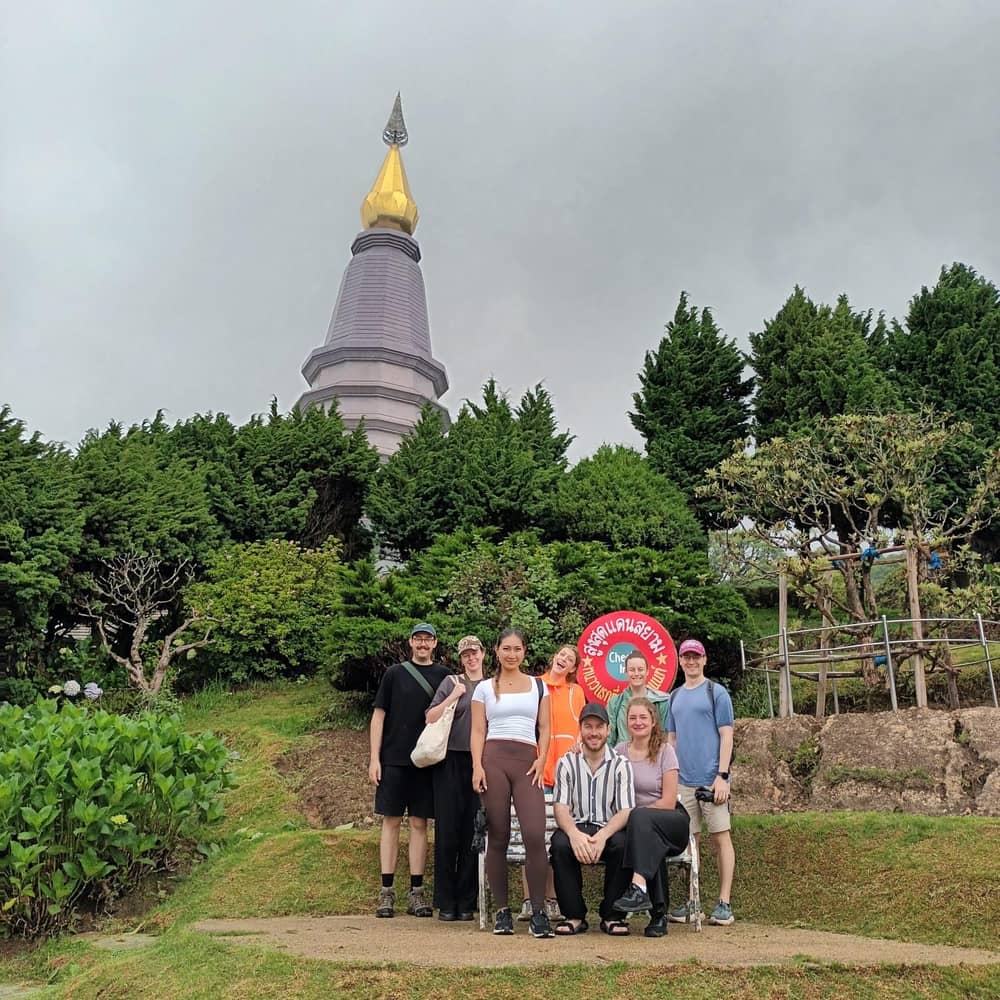
Matt and Danielle | CouplesQuest_ on YouTube · Video data is requested only when you tap play.
At the top, the temperature drops below zero in winter and is quite comfortable in summer.
From June to November the park is in its rainy season, and a packable rain shell earns its space.4 Waterfalls run strongest then, and the trail through the forest gets slick. The park has even closed a trail and its waterfalls when the water ran too high, reopening them once the level returned to normal.28 After heavy rain the trail is wet and the stream crossings are loud and cold, so seal your phone in a waterproof pouch.
Wind is the other factor higher up. The park warns of gale-force winds at the summit, which turns a cold morning into a colder one.21 A windproof outer layer weighs little and removes most of that bite, so it is worth packing even in the warm months. A neck gaiter or a buff weighs almost nothing and does a surprising amount of work on an exposed ridge when the wind picks up, particularly if you stop to wait for a view.
Cloud changes the view more than the temperature. With the forest above 1,800 meters clouded for much of the year, a clear summit view is a bonus rather than a promise.15 Pick a morning slot if you can, since the mist tends to be thickest early, and keep the plan flexible for a viewpoint that is white at first and clear an hour later. Photographers will want a lens cloth, because mist condenses on glass and a dry cloth is the difference between a sharp frame and a soft one.
Day tours leave Chiang Mai early and climb the same road. The site tour is a 9 hour day with the Ang Ka boardwalk, a pagoda, a village stop at Mae Klang Luang and a call at Wachirathan, which sets a cold summit beside a warm waterfall stop. The base is warm and the summit is not, so the layering advice above is what makes the whole day comfortable. Since the tour covers a lot of ground, a sound plan is to dress for the summit stop and then adjust as the road drops back toward the warm lowlands.
If the Kew Mae Pan hike is your reason to go, check the season before booking. One listing says the hike is only available from November to May each year, while another says the trail is open from November to April. The two listings differ by a month, so treat the cool months as the window and confirm the date with the operator. Ask the operator which trail is open on your date, since conditions and park rules decide it, and make sure the alternative suits your fitness and your shoes.
The summer months from March to May suit the lower waterfalls and the villages, while December to February suit the summit, the mist and the cherry blossom.4 Whichever you pick, book the earliest departure, carry the warm layer in a daypack, and note that the site tour carries free cancellation until a day before departure. Keep your flexibility high, and remember that the weather is the one item no booking page can promise, which is why layers beat any fixed plan.
FAQ
The park calls the climate quite comfortable at the top in summer and rather cool all year because of the elevation.1
That is the park's own definition, with summer from March to May and winter from December to February.4
TAT describes Wild Himalayan Cherry blooming pink in January, and names Doi Inthanon as one of the places that show it.26
The summit was 5°C on a winter morning when the city was 24°C, so a layer is worth carrying even on a warm Chiang Mai day.3
The park says the forest above 1,800 meters is clouded and foggy for the majority of the year.15
Sources
Planning a day on Doi Inthanon? Ask a real person here.